
The Ultimate Guide to PESO Approval
Key Takeaways:
- Firms that make, fill, store or import cylinders need PESO approval. What you do decides the rule and the license form.
- Filing happens online and moves through six clear steps. PESO aims for 21 days, but plan for one to three months.
- Foreign makers need their own approval and an Indian partner. Mismatched papers, missing NOCs or the wrong form often cause delays.
- Compliance goes on with cylinder tests, renewals and, since 2025, bar codes. Inspectors can ask for bar code records within 48 hours.
Every business that handles gas cylinders in India, from the manufacturer to the filling plant, needs PESO approval before the first cylinder moves. Importers and testing stations are covered too, because the Gas Cylinders Rules, 2016 treat each of these activities as a licensed one.
Approval comes from the Petroleum and Explosives Safety Organisation, the central regulator for compressed gases and other hazardous substances. Operating without it can lead to prosecution under the Explosives Act, 1884.
This guide starts with what PESO regulates and which license fits your activity. It then walks through the application steps and timelines, and closes with the compliance duties that begin once the license arrives.
What is PESO and what does it regulate?
PESO is a central government body under the Department for Promotion of Industry and Internal Trade (DPIIT), and it controls how hazardous substances are stored and moved. Its head, the Chief Controller of Explosives, sits in Nagpur and works through nine Circle offices from Chennai to Guwahati.
Explosives are only one part of the remit. Petroleum products and compressed gases fall under its watch, along with pressure vessels and certain flameproof electrical equipment.
Each product family has its own rule set, and the first task for any applicant is to identify the right one.
Rule set | What it covers | Typical applicant |
Gas Cylinders Rules, 2016 | Cylinders up to 1,000 litres water capacity, with their valves and regulators | Cylinder makers, filling plants and gas dealers |
SMPV(U) Rules, 2016 | Compressed gas held in vessels above 1,000 litres | Bulk LPG and cryogenic tank operators |
Petroleum Rules, 2002 | Storage, transport and retail of petroleum | Fuel depots and retail outlets |
Explosives Rules, 2008 | Manufacture, storage and sale of explosives | Explosives makers and fireworks units |
Table 1: The main PESO rule sets and who they apply to
A simple test settles the question in nearly every case. Gas held in a portable container of up to 1,000 litres water capacity is a cylinder matter, while a larger tank moves you into the SMPV(U) Rules. Bottling plants often need both, since they store bulk LPG in tanks and fill it into cylinders.
Types of PESO licenses and approvals for gas cylinders
Cylinder businesses deal with four kinds of permission, and the one you need follows from what you do with the cylinder. Import licenses and manufacturing approvals come from the Chief Controller's office in Nagpur.
1. Manufacturing approval
Makers of cylinders and their fittings, meaning valves and LPG regulators, need approval before production starts. Applications follow the format in Schedule III of the Rules, and the design has to conform to a standard listed in Schedule I. Approvals can be extended for up to ten years at a time on payment of the fee.
2. Filling and storage licenses (Form E and Form F)
Form E permits a plant to fill compressed gas into cylinders, and Form F permits the possession of filled cylinders at a named premises. Rule 43 makes both mandatory, with a small-quantity exemption under Rule 44 for users who hold only a few cylinders.
Filling plants usually hold the two licenses side by side, while dealers who only store filled cylinders need Form F alone. CNG dispensing stations sit under a separate Form G.
3. Import license (Form D)
Form D covers the import of cylinders, filled or empty, along with valves and LPG regulators. This Chief Controller of Explosives license runs for a maximum of one year, and the cylinders must come from a manufacturer that PESO has already approved.
Before you import filled cylinders: PESO's SOP for the Gas Cylinders Rules asks for a Form F storage license first. Empty cylinders and valves can be imported without one.
4. Cylinder testing station approval
Stations that carry out periodic examination and testing of cylinders need recognition from the Chief Controller. Lists of approved LPG and CNG testing stations appear on PESO's website, so a filler can confirm a station's status before sending cylinders.
Your activity decides the paperwork. One company that imports empty cylinders, fills them and stores them for sale would hold an import license alongside Forms E and F.
Step by step: how the PESO approval process works
The PESO certification process moves through six stages, from choosing the right rule to receiving the signed license. PESO's FAQ confirms that all applications under the Gas Cylinders Rules are filed online, so the applicant's main job is to get the documents right the first time.
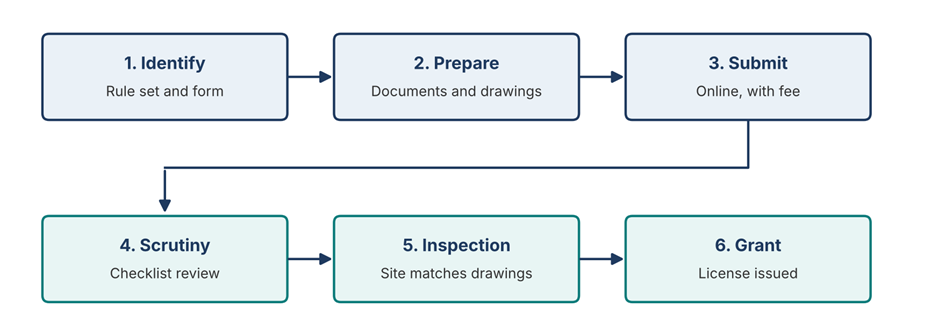
Figure 1: The six stages of a PESO license application
1. Identify the rule and license type
Start by matching your activity to a rule set and then to a form. Filing under the wrong form means filing again, which resets the clock.
2. Prepare the documents
A typical file for a Gas Cylinders Rules 2016 license to fill or store contains the items below.
Company papers: Certificate of incorporation and proof of the authorised signatory
Site drawings: Layout plan showing storage areas and safety distances
Equipment details: Specifications and test certificates for cylinders and valves
Safety documents: Operating procedures and the emergency plan
Local clearances: No objection certificate from the district authority, where the Rules call for one
3. Submit the application online
File the application on PESO's online portal and pay the fee listed in Schedule V of the Rules. Use the fee calculator on peso.gov.in to confirm the amount for each form. Investors who prefer one login will also find PESO approvals listed on the National Single Window System.
4. Scrutiny by PESO
An officer checks the file against the checklist for that license. Where something is missing, PESO issues a discrepancy letter, and its service standard for sending one is seven days. Reply to every point in one go, because each round of queries adds weeks.
5. Site inspection
Premises-based licenses may involve a visit, during which an officer confirms that the site matches the approved drawings. Safety distances and fire-fighting arrangements get the closest attention.
6. Grant of license
Once scrutiny and inspection are clear, the license is issued in the applicant's name for the specific premises and gases listed. Check the document on receipt, since an error in the gas name or the address needs a formal amendment later.
Timelines and validity
PESO's published standard is 21 days to grant a license once all necessary documents are in. In July 2024, a circular from the Chief Controller restated that target and asked offices to keep discrepancy letters to a minimum.
End-to-end time runs beyond that in practice, because the clock starts only when the file is complete. Applicants commonly plan for one to three months from first submission, and a site that needs construction changes after inspection will add further weeks.
License or approval | Form | Maximum validity |
Import of cylinders and valves | Form D | One year |
Filling of cylinders | Form E | Ten years, ending on 30 September |
Storage of filled cylinders | Form F | Ten years, ending on 30 September |
Manufacturing approval | Schedule III application | Extendable up to ten years |
Table 2: Validity of common approvals under the Gas Cylinders Rules, 2016
Licenses in Form E and Form F expire on 30 September of their final year, whatever the month of issue. File the renewal well before that date, as a lapsed license means filling has to stop until it is restored.
Special considerations for foreign manufacturers
Overseas makers face two extra requirements: an approval in their own name and a formal Indian partner. According to PESO's FAQ, a foreign manufacturer must hold a valid PESO approval before its empty cylinders can be imported for filling in India.
That partner is commonly called the Authorised Indian Representative, and PESO's documents refer to it as the Indian distributor. Manufacturers appoint this firm themselves and submit the agreement with the application, after which only that distributor may import the approved cylinders or valves.
Track record counts as well. Before granting approval, the Chief Controller considers ten years of manufacturing experience and the maker's market presence, so newer factories should expect closer questions.
Common reasons PESO applications get delayed or rejected
Mismatched documents and missing local clearances are among the commonest causes of delay, and a pre-submission check catches both. Four problems come up again and again.
Mismatched documents: The address or plot number differs between the incorporation papers and the site drawing.
Non-conforming equipment: Cylinders or valves are built to a standard that is absent from Schedule I.
Missing local NOC: The district authority's clearance is still pending when the file reaches PESO.
Wrong rule or form: A bulk storage tank is filed under the Gas Cylinders Rules when it belongs under SMPV(U).
Any of these triggers a discrepancy letter, and the 21-day standard restarts only after a complete reply. Outright rejection usually follows a more basic problem, such as a site that falls short of the required safety distances.
Pre-submission tip: Ask a colleague outside the project to compare every address and drawing number across the file. Ten minutes of cross-checking can save a three-week query cycle.
After approval: staying compliant once you are licensed
Holding a PESO license in India brings running duties, chiefly periodic cylinder testing and on-time renewal. Since April 2025, a third duty has joined them in the form of permanent, tamper-proof marking on every cylinder.
The Gas Cylinders (Amendment) Rules, 2025 require a bar code on all cylinders and cryogenic containers, and the definition includes QR codes and RFID tags. Cylinders made before 11 April 2025 were given 365 days to comply, a deadline PESO has followed up through its circulars. For CNG and other automotive fuel gases, the code must be scanned before filling, and a cylinder with an unreadable code stays empty.
Inspectors can also ask for bar code records, and the Rules give the licensee less than 48 hours to produce them in physical and digital form. Regulation keeps moving as well, with two further Gas Cylinders amendments gazetted in 2026.
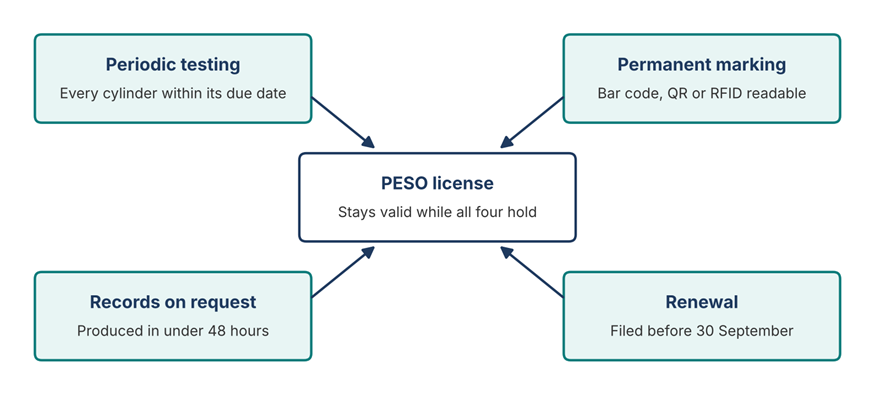
Figure 2: The four recurring duties of a PESO license holder
Lapses after approval put a license at risk as surely as a weak application does. An overdue test on a cylinder in service, or a renewal missed by a week, can each draw a notice from PESO.
Tracking these dates by hand works for 200 cylinders and breaks down at 20,000. CATalytics’ cylinder tracking software supports PESO compliance by flagging the test due date of each cylinder and by using a laser-etched QR code on a stainless steel ring as the permanent mark. Scan history stays on a central dashboard, ready for an inspector's request.
Readers who want the marking and testing clauses in detail can turn to our guide to the Gas Cylinders Rules, 2016.
Where to go from here
PESO approval follows a defined path, from the right rule and form to a complete file and a clean inspection. Compliance continues for as long as the license is in force, through testing cycles and marking checks.
Begin with the forms and SOPs on peso.gov.in, and confirm current fees there before you file. Fee schedules and amendments change, so the portal is the final word. Once you are PESO-approved: See how CATalytics keeps you compliance-ready. Book a demo.
Related posts
 Blog
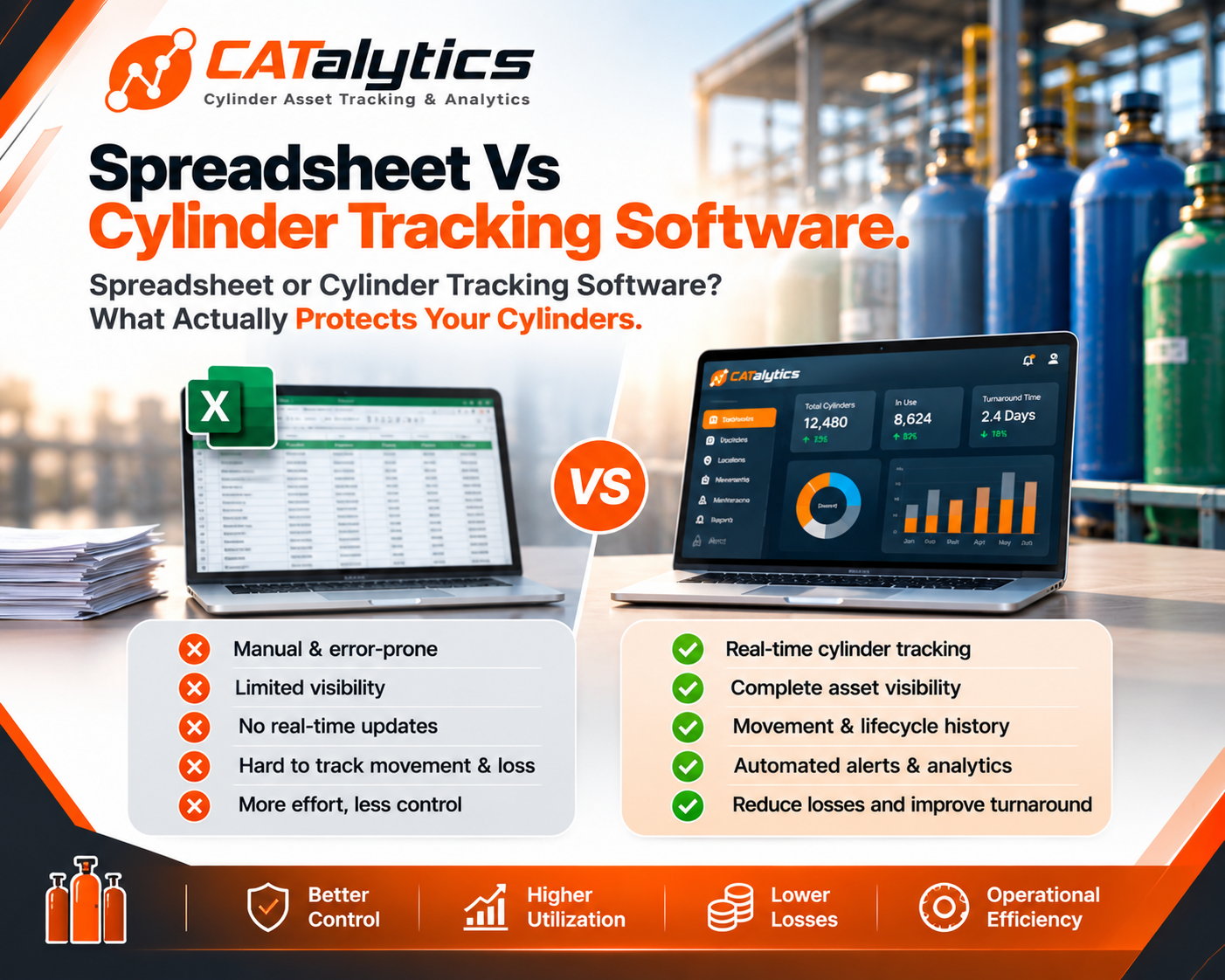
Spreadsheet or Cylinder Tracking Software? What Actually Protects Your Cylinders
Choosing between a spreadsheet and cylinder tracking software comes down to when the record is made. A sheet records a movement after someone gets round to it; tracking records the movement as it happens, from a ring on the cylinder, and everything else in this article, from demurrage to test dates, follows from that difference.
 Blog
Gas Cylinder Rules 2016: What Plant Managers Need to Know (Including the 2025 and 2026 Amendments)
This guide is written for the person who has to answer that inspector, which is why it gives the rule number and the date wherever one matters, so each claim can be checked against the gazette.
 Blog
How to Run a Cylinder Fleet Audit (Without Shutting Down Operations)
Most of a gas company's cylinder fleet is never inside its own gates. The cylinders are at customer sites, on trucks, at other plants, and in depots (sometimes where nobody has visited in months).