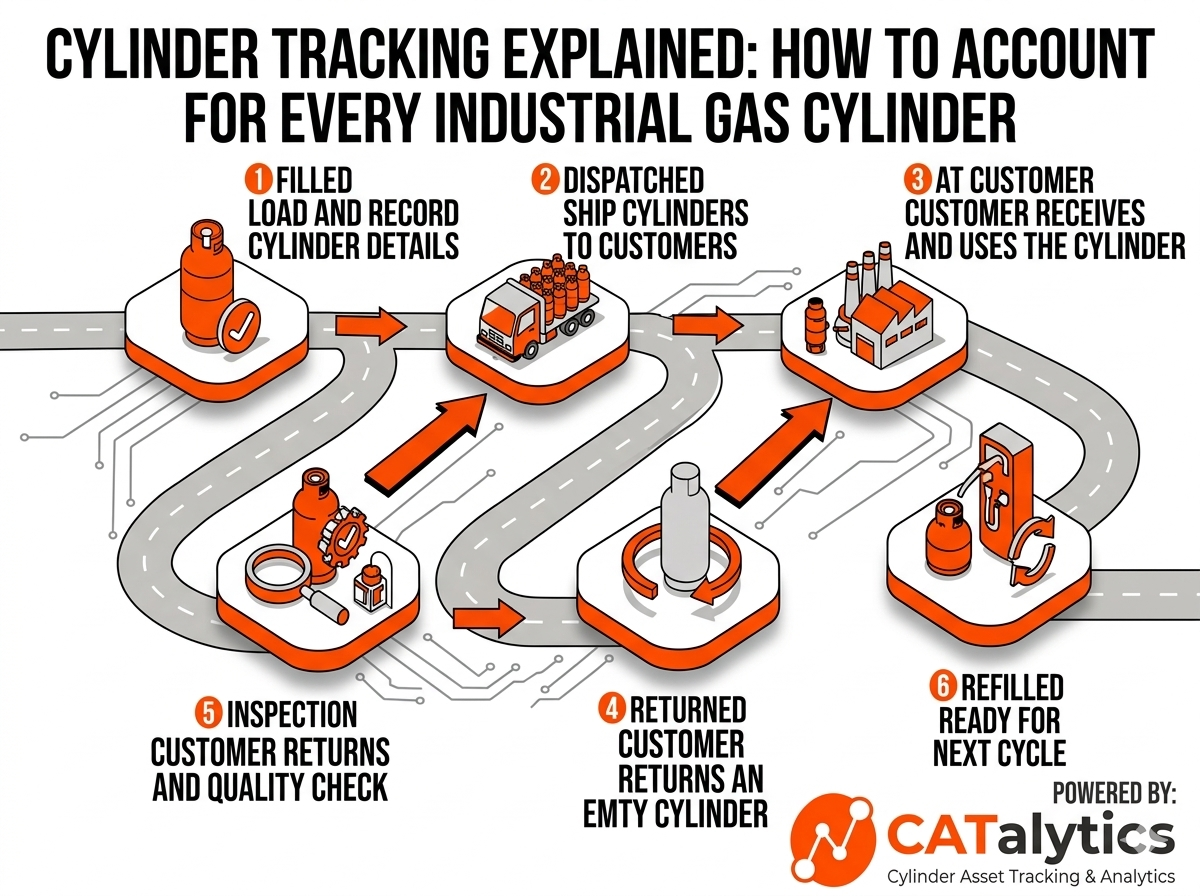
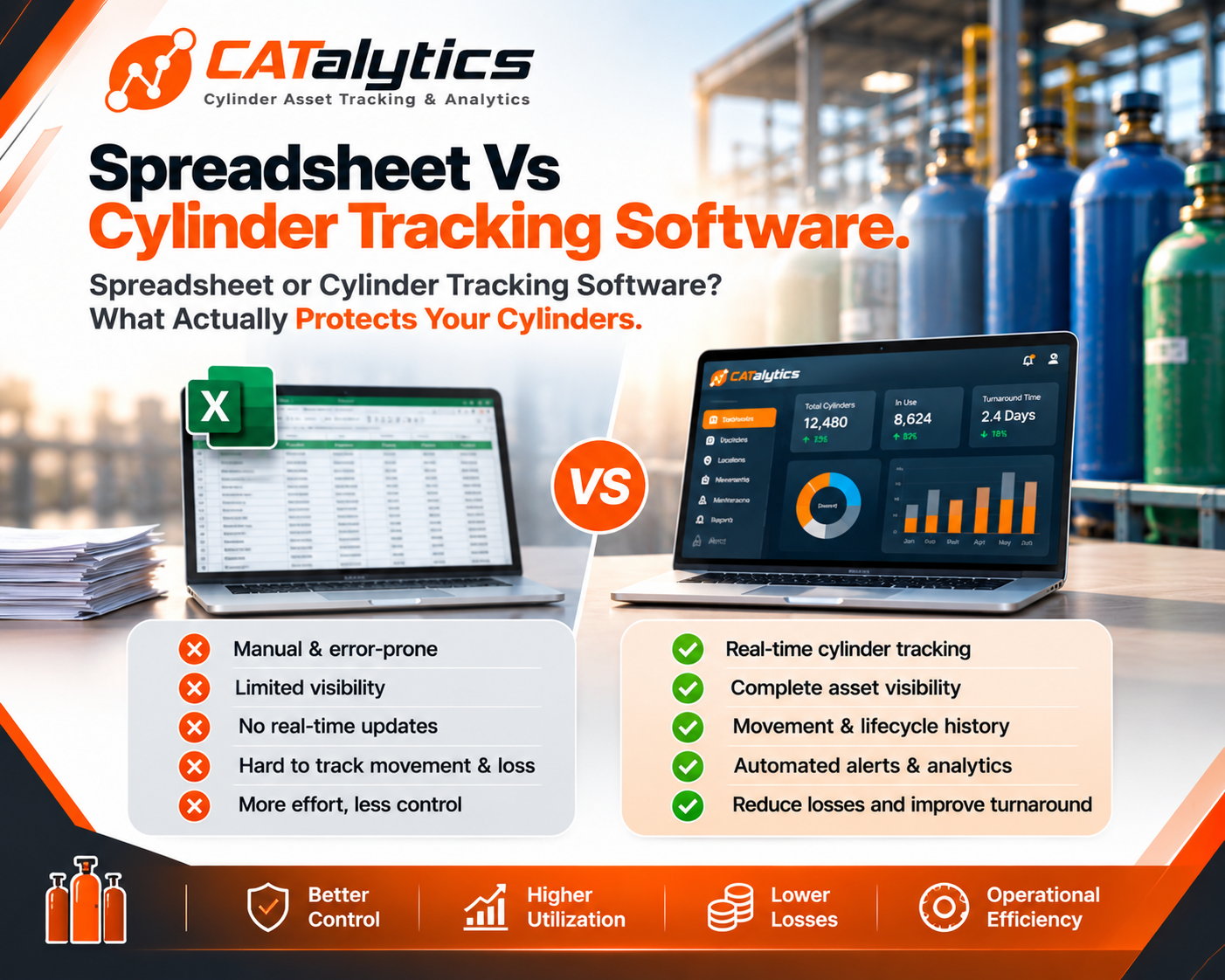
Choosing between a spreadsheet and cylinder tracking software comes down to when the record is made. A sheet records a movement after someone gets round to it; tracking records the movement as it happens, from a ring on the cylinder, and everything else in this article, from demurrage to test dates, follows from that difference.
This guide is written for the person who has to answer that inspector, which is why it gives the rule number and the date wherever one matters, so each claim can be checked against the gazette.
Most of a gas company's cylinder fleet is never inside its own gates. The cylinders are at customer sites, on trucks, at other plants, and in depots (sometimes where nobody has visited in months).
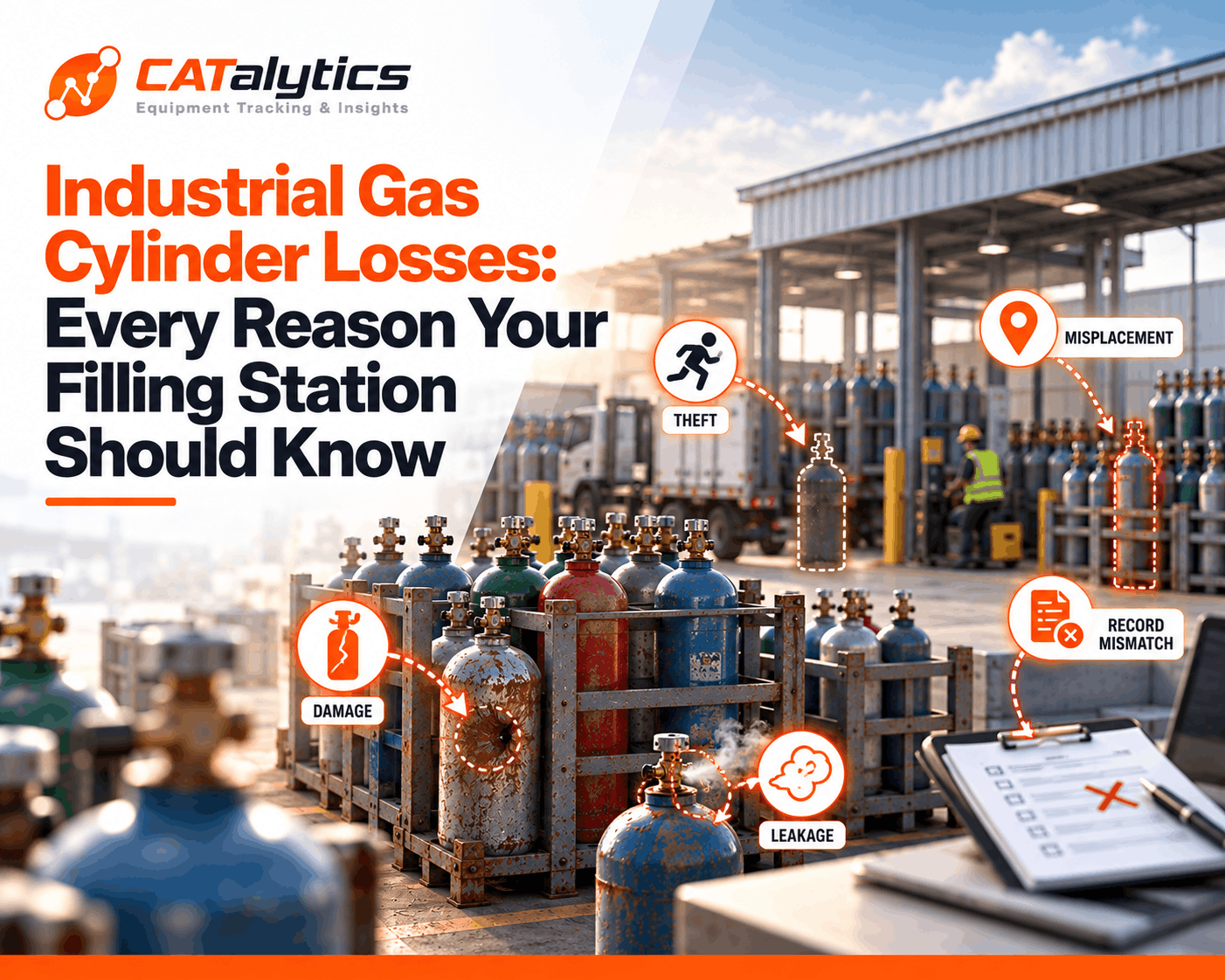
The structural problem with audit-driven loss control is one of cadence and resolution. Audits and physical counts find aggregate losses, after the fact, on a quarterly or annual cycle. Loss sources operate continuously, at shift level inside the gate and at transaction level outside it, every time
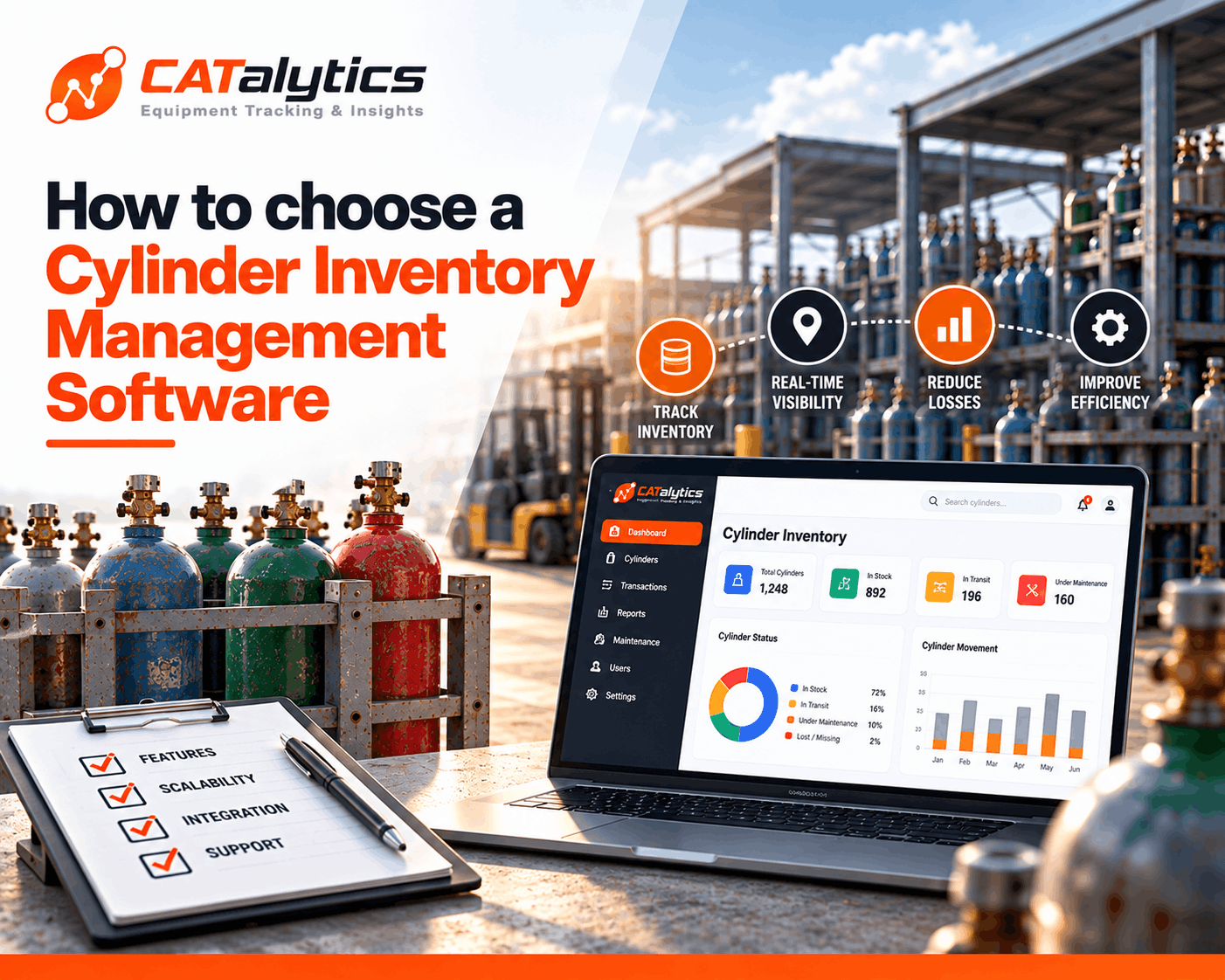
Cylinder management software record the status & movement of cylinders, across all touchpoints. Each cylinder carries a unique ID, & every handover is logged.
A printed or etched code does not lose signal as it ages, and if a sticker ever wears, replacing it costs almost nothing. This is why CATalytics is built around QR rather than RFID.

 Blog